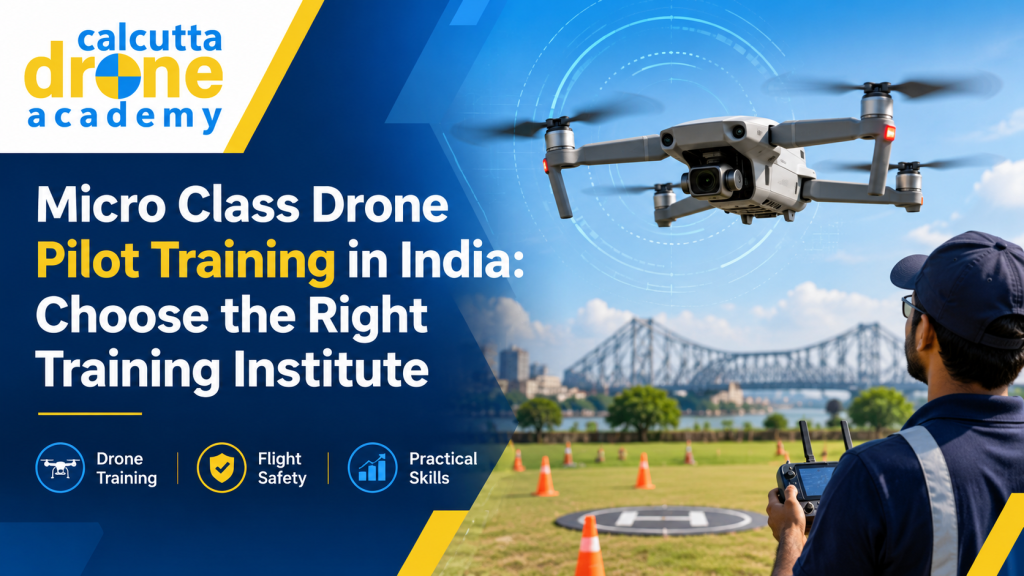
Drones are revolutionizing industries across India – from construction to agriculture, photography, surveying, infrastructure inspection and aerial mapping. With the price of drone technology continuing to drop, awareness of drone safety, flight operations and aviation regulations are more critical than ever for both aspiring drone pilots and professionals.
If you are looking for micro class drone pilot training in India, selecting the right training program is an important first step. Micro class drone pilot training has a different page at Calcutta Drone Academy. This helps interested students know the various options of drone training available and know the skills needed for responsible drone operations.
Micro Class Drone Pilot Training?
Flying drones comes with different categories or “classes” and each category comes with its own rules and requirements. One of these classes is the “micro class.”
So, what exactly is Micro Class Drone Pilot Training?
The micro class drones are the smallest of the drones allowed for commercial use. They’re lightweight, weighing in at less than 0.55 pounds, and can be flown without a Part 107 license as long as they meet spe Micro class drone pilot training teaches students the basics of small unmanned aircraft systems operation such as flight controls, operational safety and responsible drone use. The micro category under India’s Drone Rules, 2021, generally covers drones weighing from 250 grams to 2 kilograms. The applicable requirements depend on the aircraft, the intended operation and the operating environment.
Training can help learners to understand basic flight principles, battery management, pre-flight checks, airspace restrictions and safe landing procedures. They help those who want to operate drones professionally or fly them for fun in a responsible way.
Reasons to Pick a DGCA Approved Drone Training Institute
You need to select a DGCA approved drone training institute if you need training under the regulated remote pilot certification in India.
The Directorate General of Civil Aviation (DGCA) governs the relevant requirements for drone training and remote pilot certification. Before enrolling, check that the training organization has valid authorisation for the specific category, subcategory and class of drone covered by your intended course.
A good training program should give clear information about its curriculum, its instructors, its training facilities, its practical sessions and its relevant certification requirements.
Here are some things to look for while comparing drone training institutes:
- Regulatory compliance – Review the scope of the current DGCA authorisation of the institute.
- Practical experience: You will learn supervised flying techniques and flight safety procedures.
- Training curriculum: Look for classes that cover drone controls, pre-flight checks and emergency procedures.
- Instructor experience: Verify the instructor’s credentials and operating experience.
- Course details: Know about the eligibility, fees, duration and the certificate or qualification that is on offer.
These checks help you to choose a program that will meet your learning objectives and any regulatory requirements.
What will you learn in Micro Class Drone Pilot Training in India?
A well-structured drone training program can cover a number of important areas depending on the course syllabus.
1. Drones and Basic Flight Controls
Learn about the main components of a drone including motors, propellers, batteries, flight controllers and remote control systems. See how these parts come together to fly steadily.
2. Safety and Pre-Flight Check
Learn to check propellers, batteries, connections and other important parts before flying. Knowledge of safe take-off, landing and emergency response procedures is a good way to minimise operational risks.
3. Drone rules and airspace laws
Learn why it’s important to check airspace restrictions, designated no drone zones and applicable operating conditions. Resources for understanding drone operations and regulatory requirements are made available through India’s Digital Sky platform.
4. Practical flying skills
Supervised practical exercises can assist learners develop confidence in take-off, hovering, directional control and landing where part of the course. The practical training requirements vary according to the course and authorisation.
Who Should Take Drone Pilot Training?
Micro drone training can be beneficial for beginners, students, photographers, agricultural workers, construction workers and those interested in a career with drones.
It also may be useful for professionals looking to learn how drones can assist aerial photography, land surveys, site documentation, infrastructure inspections and other commercial endeavours.
However, the course eligibility and certification requirements are contingent on the training program and the applicable regulations. Micro category operations are not necessarily subject to the same remote pilot training or certificate as other drone categories. Before you enrol, review the requirements for your specific use case.
Why Calcutta Drone Academy ? Why Join us?
The first step in selecting a proper training institute is to understand the course that is being offered, its learning objectives and practical relevance.
Calcutta Drone Academy’s micro class drone pilot training page is a good place for prospective learners looking for information on drone education in India. Look at the course information available, ask about the training format and make sure the program is suitable for your intended learning and regulatory requirements.
If you are from Kolkata or any other part of West Bengal, please contact the academy to confirm the training venue, upcoming batches, practical training arrangements, fees and eligibility criteria before making up your mind.
See course: Micro Class Drone Pilot Training at Calcutta Drone Academy
FAQs
1. How to find DGCA Approved Drone Training Institute in India?
Go through the list of approved Remote Pilot Training Organisations (RPTOs) on the official DGCA and Digital Sky websites. Check the institute’s current authorisation, approved training scope and location before enrolling.
2. Is drone pilot training mandatory for micro class in India?
Not for any procedure. “Indian drone regulations specify the type of drone and nature of operation for remote pilot training and certificate requirements. If the applicable rules and conditions are met, remote pilot certificate requirements may not apply to micro drones operating in uncontrolled airspace.
3. What is the micro-drone’s weight?
The term micro drone is usually understood as a drone having weight more than 250 grams and up to 2 kilograms under the Drone Rules, 2021 of India.
4. What are career opportunities after drone training?
Opportunities for drones could include aerial photography, surveying, agriculture, construction documentation, mapping and inspection services. Your opportunities of employment will be determined by the skills, experience and qualifications you possess and the requirements of each job.
5. How do I find out more about training for a micro class drone pilot?
For course info, check out the Calcutta Drone Academy micro class drone pilot training page, and contact the academy for the latest.
Begin Exploring Drone Training Opportunities
There are exciting opportunities for learners and professionals all over India in drone technology. Understanding the basics of flying, operational safety and the regulations that apply will help you make informed decisions about your training pathway.
For those looking for micro class drone pilot training in India, visit Calcutta Drone Academy’s course page to review the program details available and select training that meets your objectives and the relevant regulatory requirements.