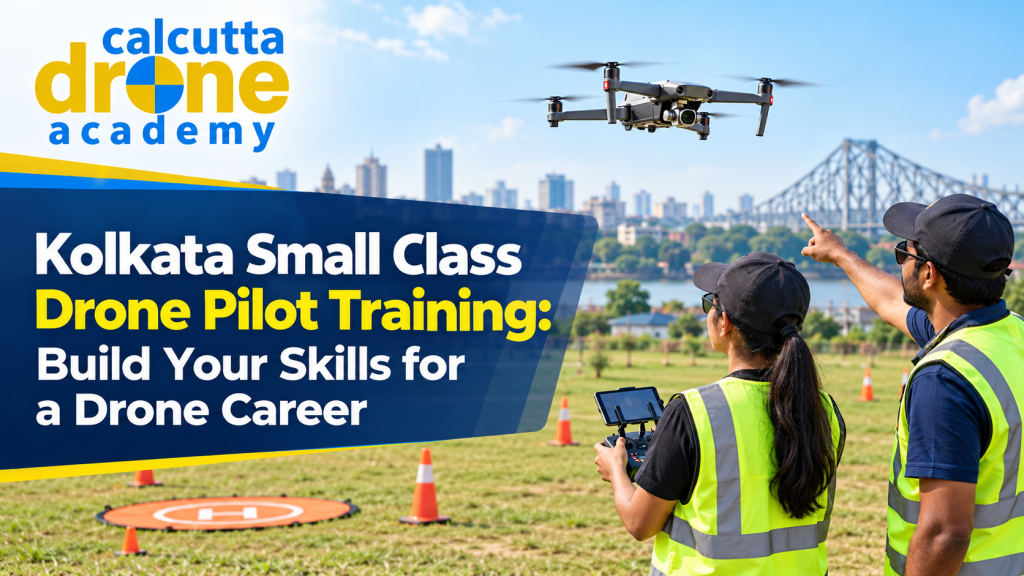
The drone industry is creating new opportunities in surveying, agriculture, infrastructure inspection, aerial photography and other tech-driven areas. As the interest in unmanned aerial vehicles (UAVs) increases, businesses are more interested in trained drone pilots to ensure safe and efficient operations. Small Class Drone Pilot Training is a practical starting point for students, professionals and aspiring aviation enthusiasts to develop professional drone-flying skills.
If you are looking for Small Class Drone Pilot Training in Kolkata then choose a course that includes theoretical knowledge, practical flying and aviation safety awareness to prepare you for real world drone operations. Calcutta Drone Academy offers a local entry point into drone training and understanding the skills required to enter this burgeoning field.
What Is Small Class Drone Pilot Training?
The Small Class Drone Pilot Training teaches students how to safely and responsibly operate small-category drones. According to India’s Drone Rules, 2021, the small category usually includes unmanned aircraft weighing between 2 kg and 25 kg (including payload).
Training usually covers drone basics, flight controls, airspace awareness, pre-flight checks, emergency procedures and practical flight training. If you are a candidate for a Remote Pilot Certificate, you must make sure that the course and the training organization you have chosen comply with the requirements of the Directorate General of Civil Aviation (DGCA) that apply.
Why Choose Small Batch Drone Pilot Training in Kolkata?
Kolkata is an important commercial and educational hub of eastern India. Students in Kolkata and the neighbouring areas can take up drone training to gain technical skills and know more about the latest UAV applications.
There are many advantages to choosing Small Class Drone Pilot Training in Kolkata:
- Local learning opportunities: Find out about training options without having to relocate to a new city immediately.
- Practical skills: Know the fundamentals of managing drones, preparing for flight and safe operation.
- Industry awareness: Knowledge of how drones are used in surveying, agriculture, construction and aerial imaging.
- Career readiness: Prepare for further training and appropriate entry level positions.
- Regional accessibility: Find courses that are accessible for learners from New Town, Salt Lake,
Howrah and other parts of Kolkata region.
Prior to registration, verify the academy’s training location, course schedule, practical flight arrangements and current authorisation status.
Drone Pilot Training: What Will You Learn?
A good Small Class Drone Pilot Training program should cover both technical knowledge and safe operating habits.
1. Drone Basics and Flight Principles
Learn about components of UAV, flight controls, propulsion systems, batteries, sensors and basic flight dynamics. Understanding how these components work together helps pilots operate equipment more confidently.
2. Airspace Safety and Drone Regulations
Learn about the importance of India’s drone regulations, permitted flying areas, operational restrictions and pre-flight airspace inspections. Pilots must comply with the appropriate rules and obtain permissions wherever required.
3. Practical Use of Flying Drones
Learners can develop their take-off, landing, hovering, directional control and manoeuvring abilities by participating in supervised practical sessions. Training should be conducted according to the ability of the learner and the approved course syllabus.
4. Pre-Flight Checks and Maintenance
Learn to check batteries, propellers, motors, controls and other vital components pre-flight. Regular inspections can help to prevent unnecessary equipment breakdowns and increase safety during operations.
5. Risk Assessment and Emergency Procedures
Know how to identify possible risks, respond to unexpected situations and make sound flight decisions. Risk assessment is an essential component of professional drone operations.
Who Can Get Small Class Drone Pilot Training?
Small Class Drone Pilot Training is a good option for students, graduates, working professionals, photographers and anyone interested in UAV technology.
However, eligibility will depend on the course and any regulatory requirements that apply. For a Remote Pilot Certificate, candidates should check with the authorised training organization for the current minimum age, education requirements, medical fitness requirements and documentation before applying.
Unless the selected program states otherwise, no previous professional drone flying experience should be assumed to be necessary.
Small Class Drone Pilot Training Career Options
Drone technology has use cases in multiple industries. Opportunities for trained pilots may include: (additional skills, experience, employer requirements and applicable permissions needed)
- Land surveying and mapping: Assisting aerial data collection and site documentation.
- Agriculture: Helping with crop monitoring and other approved drone activities in agriculture.
- Construction and infrastructure: Taking aerial images to monitor site progress and conduct inspections.
- Photography and Filmmaking: Assisting in the production of aerial content for commercial projects.
- Industrial inspection: Assistance in visual inspections of suitable structures and assets.
- UAV services: Developing skills for freelance or business-related drone operations.
Completing the course does not ensure that you will be employed. The career outcomes depend on practical competence, additional technical knowledge, industry demand and compliance with applicable regulations.
Choosing the Top Drone Training Institute in Kolkata
Choose your training provider carefully before starting a course. Make sure that the organization is currently authorised by DGCA for the relevant category and course and that the training leads to the certificate you require.
Take into account these factors:
- Valid DGCA authorisation and eligibility of course.
- Instructor qualification and training experience.
- Practical flying under supervision.
- Syllabus, duration and assessment methods of the course.
- Training equipment and safety procedures.
- Total fees, examination charges and certification details.
- Assistance with documentation and career advice, if provided.
Calcutta Drone Academy Contact Details For Training Available, Upcoming Batches, Eligibility & Practical Training You can contact Calcutta Drone Academy regarding training availability, upcoming batches, eligibility and practical training arrangements. Check the latest course information directly before making an admission decision.
Begin Your Drone Pilot Training Journey in Kolkata
The key to developing drone-piloting skills is the right training, consistent practice and a clear understanding of aviation safety. If you are interested in pursuing Small Class Drone Pilot Training in Kolkata, consider the different programs available and choose one that meets your career goals and certification requirements.
For the latest course structure, training schedule, fees and enrolment process, contact Calcutta Drone Academy. Begin your journey toward understanding professional UAV operations and establishing a foundation for future career opportunities in the drone industry.
Common Questions
1. What is a Small Class Drone Pilot Training?
The Small Class Drone Pilot Training aims to educate students in the theory, safety awareness and practical flight training necessary to understand and operate small category drones.
2. Where can I get Small Class Drone Pilot Training in Kolkata?
You can check out course options at Calcutta Drone Academy and compare with other local providers. Confirm training location, actual flying arrangements and current DGCA approval before registering.
3. What is the maximum weight of a small-category drone in India?
Small category generally includes unmanned aircraft weighing more than 2 kg and up to 25 kg including payload, under India’s Drone Rules, 2021.
4. Do I need a Remote Pilot Certificate to operate a small drone?
The requirement is dependent on the drone, its intended application and any applicable exemptions under the existing Indian regulations. Please check the latest Drone Rules and DGCA guidance before flying.
5. What are the career opportunities after becoming a drone pilot?
Potential areas include surveying, mapping, agriculture, aerial photography, construction monitoring and some inspection services. The opportunities are based on your practical skills and the requirements of each role.
6. How to choose a good drone training institute?
Verify the current DGCA authorisation, course eligibility, practical flight hours, instructor qualifications, equipment, safety procedures, fees and the certificate issued on successful completion.
7. How to take admission in Calcutta Drone Academy?
Please visit the Small Class Drone Pilot Training page and get in touch with academy to check availability, eligibility, fees and next batch.